Breastfeeding Co-Sleeping Boy – Modern
A Thoughtful, Warm-Hearted Design for Conscious Apparel Brands
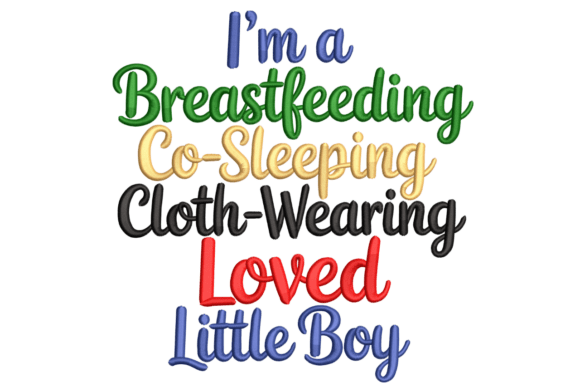
As an embroidery designer who’s developed over 200+ commercial designs for boutique apparel lines — from organic cotton tees to limited-run hoodies — I approached Breastfeeding Co-Sleeping Boy – Modern with both curiosity and critical intent. This isn’t just another nursery-themed embroidery file; it carries quiet intentionality in its line work, gentle scale, and emotional resonance. Visually, it reads as soft yet confident: a tender, cloth-wrapped infant nestled close, rendered with clean satin-stitched contours and subtle fill textures. There’s no clutter, no cartoon exaggeration — just warmth, modern minimalism, and unmistakable authenticity. It feels premium without being stiff, nurturing without leaning into cliché, and distinctly contemporary in its parenting narrative.
How It Performs Across Real Apparel Applications
For sweatshirt embroidery, Breastfeeding Co-Sleeping Boy – Modern shines on chest placement — especially on midweight French terry or brushed fleece. Its balanced proportions (neither too tall nor too wide) avoid visual top-heaviness on relaxed-fit garments. On oversized hoodies, I’d recommend placing it slightly higher than center-chest to maintain proportion against broader silhouettes. As a sleeve accent? Yes — but only on the upper bicep curve, where fabric tension remains stable during wear and washing.
On dark apparel — charcoal heather, navy, or black sweatshirts — this Creative Fabrica embroidery design gains quiet gravitas. Pair it with ecru, oatmeal, or heather grey thread colors for contrast that reads clearly without shouting. Avoid stark white thread on black unless you’re intentionally going bold; the design’s mood leans toward hushed reverence, not high-contrast statement.
For t-shirt embroidery, keep it simple: one centered chest placement works best. The stitch density appears moderate — not overly dense like some floral motifs — so it holds up well on lightweight jersey, provided you use a light cutaway or tear-away stabilizer. Denim jackets? Use it sparingly — ideally on the back yoke or lower left chest — and always test on scrap denim first. The fabric’s rigidity and texture can shift how satin stitches lay, especially around curved edges of the baby’s head or swaddle wrap.
Tote bags and cozy seasonal outfits (think knit cardigans or waffle-weave robes) are where Breastfeeding Co-Sleeping Boy – Modern truly connects emotionally. Its gentle scale reads beautifully at arm’s length in lifestyle product photos, and it translates cleanly into printable mockups for Etsy listings or Instagram carousels. For small shop product storytelling, it adds instant credibility — signaling values-aligned branding without needing explanatory text.
Where Placement and Fabric Matter Most
This machine embroidery design is not ideal for tiny placements (under 3 inches wide) — fine details like the baby’s fingers or cloth folds may lose definition. Likewise, avoid tight curves (like collar bands or deep V-necks) unless you’ve tested hoop alignment and fabric stretch. Ribbed fabric (e.g., sweater knits or textured cuffs) demands extra stabilizer support beneath the hoop to prevent puckering in satin-stitched areas.
Fleece and brushed fabrics benefit from a medium-weight cutaway stabilizer paired with a slightly reduced top tension — the design’s smooth contours rely on even stitch laydown. And while it’s labeled under Nursery, don’t limit it there: it’s equally powerful on adult unisex apparel targeting conscious parents, lactation consultants, doula collectives, or postpartum wellness brands.
Design Integrity Meets Commercial Value
Using Breastfeeding Co-Sleeping Boy – Modern elevates perceived brand value because it avoids trend-chasing. It doesn’t scream “viral” — it whispers “I see you.” That builds buyer trust, especially among discerning Etsy sellers and handmade product customers who prioritize meaning over mass appeal. When repeated across a cohesive collection (e.g., matching parent-and-baby sweatshirts or sibling-themed totes), it strengthens visual consistency and product recognition — key for small clothing brands building identity through repetition, not repetition through randomness.
It also invites deeper customer engagement: parents tag friends, share stories in comments, and photograph their children wearing pieces featuring the design. That organic reach is gold for creative entrepreneurs scaling authentically — no algorithm hacks required.
Practical Designer Notes Before You Stitch
- Always test on scrap fabric — especially if using stretchy knits, fleece, or ribbed materials.
- Confirm stabilizer choice: light cutaway for knits, medium for fleece, tear-away for stable wovens like denim or canvas.
- Review thread color contrast carefully — this design relies on tonal harmony, not contrast alone.
- Verify hoop size and stitch density in the Creative Fabrica embroidery file details before digitizing or resizing.
- Inspect the digital embroidery file for nested elements — some versions include optional text or decorative borders that may need toggling off for apparel use.
- Compare placement options on a garment mockup before hooping: chest, sleeve, back yoke, or lower front hem each create different emotional impacts.
- Check licensing terms on Creative Fabrica — especially if producing finished product for resale. Some embroidery files allow commercial use; others require extended licenses.
Final Thoughts for the Boutique Embroiderer
Breastfeeding Co-Sleeping Boy – Modern isn’t flashy — and that’s its strength. In a market saturated with ironic slogans and hyper-stylized graphics, it offers grounded, heartfelt visual language. For embroidery shops crafting custom apparel, Etsy sellers launching a postpartum capsule collection, or small clothing brands defining their voice, this machine embroidery design delivers emotional precision. It’s versatile enough for sweatshirt embroidery and delicate enough for heirloom-style totes. It supports brand identity without overshadowing it. And when stitched with care — correct stabilizer, thoughtful thread selection, intentional placement — it transforms neutral apparel into meaningful wearable storytelling. That’s not just decoration. That’s connection, stitched.