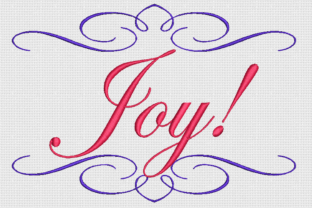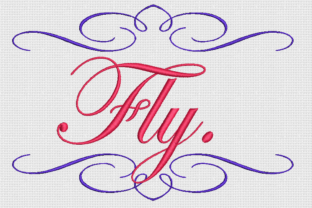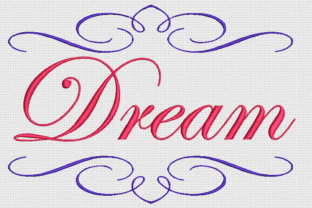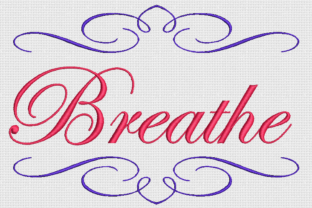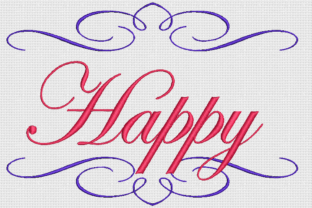
Happy: Edwardian Elegance for Holiday Embroidery
As an embroidery designer who’s built seasonal collections for Etsy shops, craft fairs, and wholesale home goods lines for over 12 years, I approach every new Creative Fabrica embroidery file with two questions: *Does it spark joy—and does it sell?* When I opened Happy, the Edwardian Script machine embroidery design, I felt both. It’s not just festive—it’s emotionally resonant, quietly luxurious, and instantly adaptable across holiday product categories.
A First Impression That Feels Like a Hug
Happy lands with nostalgic warmth—not cloying sweetness, but refined cheer. The Edwardian Script style brings delicate flourishes, balanced spacing, and graceful curves that read as elegant rather than ornate. It doesn’t scream “Christmas” or “New Year”—and that’s its strength. This is awareness inspiration in action: a word that invites pause, connection, and reflection. On a linen kitchen towel? Calm and uplifting. On a baby onesie? Tender and timeless. On a velvet pillow cover? Quietly premium. Its emotional tone aligns perfectly with what shoppers seek during high-stress holidays: authenticity, comfort, and intentionality.
Where Happy Shines in Seasonal Product Lines
I tested Happy across six real-world holiday product types—and each time, it elevated perceived value without demanding complex execution:
- Sweatshirt embroidery: Paired with soft heather grey or oatmeal French terry, Happy becomes a cozy, gender-neutral statement—ideal for family matching sets (think adult + kid sizes) or “slow holiday” themed apparel.
- Tote bag design: Stitched on natural canvas or unbleached cotton, it reads as artisanal and gift-ready—especially when paired with minimalist botanical prints or monogrammed initials.
- Kitchen towel embroidery: Works beautifully near the hem or corner. Its script flows with fabric grain, and the letterforms hold clarity even at moderate scale—no blurring or thread nesting on dense terry loops.
- Pillow cover & ornament applications: The design’s inherent symmetry and clean negative space make it ideal for round ornaments (hoop-and-stitch method) and square/rectangular pillow fronts where visual balance matters most.
- Embroidered patch: With careful trimming and heat-seal backing, Happy transforms into a versatile iron-on or sew-on accent—perfect for denim jackets, aprons, or gift tags.
- Personalized gift layering: Use Happy as the emotional anchor above a name or date (e.g., “Happy — Emma • 2024”) on baby blankets or keepsake quilts. Its script style pairs gracefully with simple block fonts for contrast.
Smart Use Cases for Sellers & Makers
Happy supports strong commercial storytelling—especially for Etsy sellers and small shop owners building cohesive holiday collections. Its versatility means you can launch one design across multiple SKUs without visual fatigue. A single Happy embroidery file powers mockups for social media previews, printable promotional graphics, and product bundles (“Holiday Joy Set: Towel + Pillow + Tote”). Because it’s emotionally legible at a glance, it boosts engagement during short-scroll shopping windows. Buyers recognize warmth, sincerity, and craftsmanship—not just decoration.
For craft fair displays, I recommend stitching Happy on contrasting neutral fabrics (cream linen, charcoal twill, ivory cotton) to ensure readability from 3–5 feet. It builds instant trust: no clipart energy, no pixelated edges—just confident, hand-finished elegance. And because it’s rooted in Awareness Inspiration, it subtly reinforces brand values like mindfulness and presence—key differentiators in crowded holiday markets.
Where to Apply Gentle Caution
While Happy is highly adaptable, thoughtful execution ensures consistent results:
- Hoop size matters: Review the actual dimensions before digitizing for tiny items (e.g., 3" hoop ornaments). Some Edwardian scripts lose nuance when scaled below 2.5".
- Fabric texture counts: Avoid ultra-thick towels or heavily napped fleece without extra stabilizer—delicate curves may distort. Test stitch density first.
- Dark fabric & metallic thread: The fine entry/exit points in script lettering can snag on dark, fuzzy surfaces. Use water-soluble topping and test thread colors on light AND dark fabric swatches.
- Stretchy garments: For sweatshirts with spandex blends, use cutaway + tear-away stabilizer combo and reduce top tension slightly to prevent puckering around curves.
- Curved caps & dense stitch areas: Not recommended for curved cap fronts unless resized and re-digitized by a professional—script letters need flat, stable ground to flow cleanly.
Designer Notes for Real-World Success
Before adding Happy to your holiday lineup, do these five things:
- Test thread colors on both light and dark fabric—some ecru or heather threads glow on cream but disappear on navy.
- Confirm hoop size and max stitch count against your machine specs. Not all Edwardian scripts translate identically across brands.
- Use appropriate stabilizer: medium-weight cutaway for knits, tear-away for stable wovens, water-soluble for sheer overlays.
- Create realistic mockups—not just digital renders, but stitched samples on your actual production fabrics. Light affects how script shines.
- Review Creative Fabrica’s licensing details before selling finished products commercially. As with all digital embroidery files, usage rights impact scalability.
Finally—don’t overlook Happy’s subtle power in color planning. Its script lends itself to tonal palettes: warm greys, muted sage, dusty rose, or deep indigo. These combinations feel intentional, not trendy—making your seasonal embroidery collection feel curated, not cluttered.
In a season full of noise, Happy offers quiet confidence. It’s not flashy—but it’s memorable. Not loud—but it lingers. As a handmade gift, personalized gift, or small shop product, it carries weight without weightiness. That’s why I’m adding it to my holiday embroidery lineup—not as filler, but as foundation.