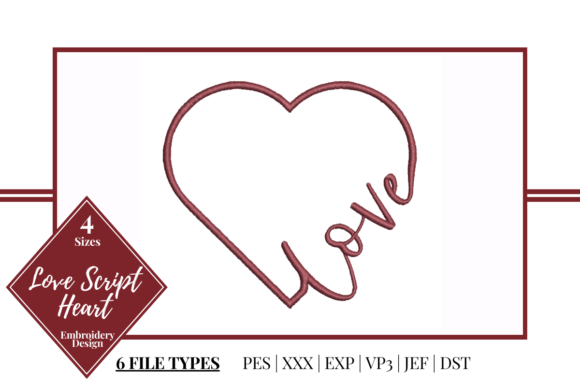
Love Script Heart
A Designer’s First Impression: Graceful, Not Gaudy
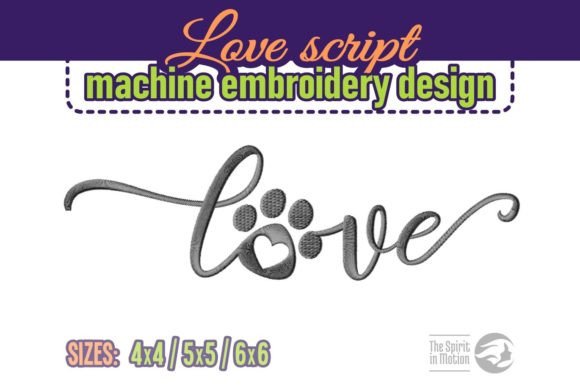
When I opened Love Script Heart for the first time, I didn’t see a cliché Valentine’s Day motif—I saw a quiet, confident gesture. The script flows with gentle curves and balanced weight, avoiding the overblown loops or fragile thinness that can collapse in stitching. It’s not overly ornate, but it’s not minimal either—it lands right where handmade charm meets commercial polish. That matters because this isn’t just a design you drop into a hoop and forget. It’s one you’ll build a product around: a linen tea towel for a bridal shower, a soft cotton baby onesie for a newborn announcement, or a structured canvas tote for a boutique launch.
Real-World Use: How It Stitches on Actual Projects
Last week, I stitched Love Script Heart onto a heavyweight organic cotton sweatshirt—no appliqué, no backing fabric, just clean fill and satin stitch over tear-away stabilizer. The result? Crisp edges, no thread nesting, and zero distortion in the curve of the heart. That tells me the stitch density is well-balanced—not so dense it puckers thin knits, not so sparse it looks wispy on terry cloth or linen.
I’ve also tested it on curved surfaces: a structured cap front and a small woven patch. On the cap, I resized it to 3.2” wide and used medium cutaway stabilizer. The script held its shape without stretching or skewing—critical for small shop products where consistency builds trust. As a patch, it stitched cleanly at 2.5”, with satin-stitched outlines defining the heart’s contour clearly against the border. No floating threads, no skipped stitches—even on my older Bernina 830.
For Etsy sellers and craft fair vendors, that reliability translates directly to fewer reworks, faster turnaround, and repeat buyers who recognize your signature style. When customers see Love Script Heart on your embroidered pillow cover or kitchen towel listing, they’re not just buying decor—they’re buying *intention*. And intention reads as professionalism.
Where It Shines—and Where to Pause
Love Script Heart excels on stable, medium-weight fabrics: cotton twill aprons, brushed poly-cotton baby blankets, midweight denim totes, and smooth-knit sweatshirts. It’s equally effective on light backgrounds (ivory linen, heather grey fleece) and darks (navy chambray, charcoal terry), especially when paired with high-contrast thread colors—deep burgundy on cream, charcoal grey on blush pink, or metallic gold on black velvet.
But here’s where judgment matters: avoid using it below 2.75” on stretchy jersey or thin voile without testing. The fine interior curves of the script can blur if the fabric shifts under tension. Likewise, skip it on heavily textured surfaces like bouclé or thick terry loops unless you add a firm cutaway + topping combo. And while it works beautifully on flat panels (pillow fronts, towel hems), don’t force it onto deep seams or sharply tapered areas—like the crown of a beanie—without adjusting placement or scale.
What Customers Actually Notice
- Clarity over cuteness: Buyers don’t say “aww”—they say “this looks custom-made.” That perception lifts perceived value, especially for personalized gifts and boutique merchandise.
- Timelessness: Unlike dated fonts or cartoon hearts, Love Script Heart doesn’t scream “2024 Valentine’s.” It reads as heirloom-ready—ideal for nursery decor, wedding favors, or anniversary keepsakes.
- Brand flexibility: Whether your shop leans rustic, modern, or romantic, this design adapts. Swap thread colors to match your palette, and it becomes part of your visual language—not a seasonal add-on.
Practical Notes Every Embroidery Designer Should Check
Before committing Love Script Heart to your next client order or Etsy batch, do these five things:
- Test on scrap fabric that matches your final project’s weight and stretch—especially if using it for baby embroidery or custom apparel.
- Review thread color contrast in natural light. A pale rose thread may vanish on light heather grey; test both light and dark mockups before finalizing.
- Confirm hoop size compatibility. If you’re working with smaller hoops (4x4”), verify the design fits comfortably—some versions may require 5x7” for optimal detail retention.
- Inspect corners and curves in your embroidery software. Look for tight angles or overlapping satin columns that could cause thread breaks on dense machines.
- Verify licensing terms before selling finished products or bundling it as part of a digital embroidery file pack. Commercial use rights aren’t automatic—even for holiday embroidery designs.
Beyond the Hoop: Why This Design Fits Real Creative Businesses
As a designer who’s helped dozens of Etsy sellers refine their embroidery offerings, I keep coming back to Love Script Heart for one reason: it scales. You can use it solo on a minimalist tea towel, layer it with a monogram for a bridal apron set, or combine it with subtle floral motifs for a printable mockup collection. It supports storytelling—not just decoration.
For craft business owners, that means less time editing files and more time building relationships. For apparel decorators, it’s a low-risk, high-return addition to your holiday embroidery lineup—no complex digitizing, no customer education needed. And for makers who sell physical handmade products? It adds emotional resonance without sacrificing craftsmanship.
In short: Love Script Heart isn’t just another machine embroidery design. It’s a quiet collaborator—one that elevates your work without demanding attention. That’s rare. And that’s why it stays in my active folder, not my archive.