Merry Christmas with Whimsical Trees
First Impression: Modern, Playful, and Instantly Recognizable
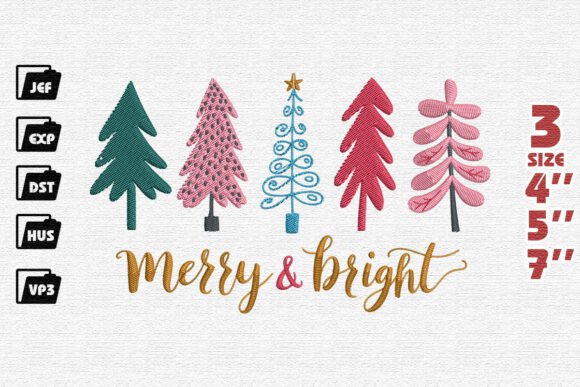
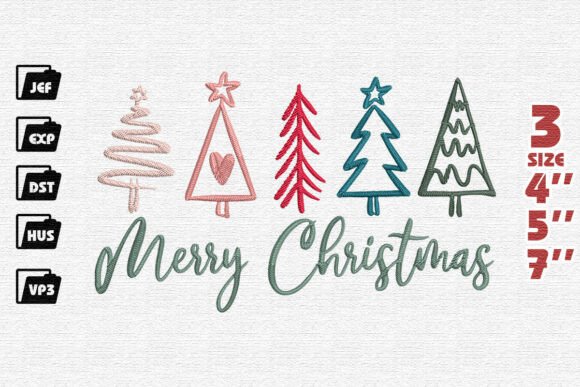
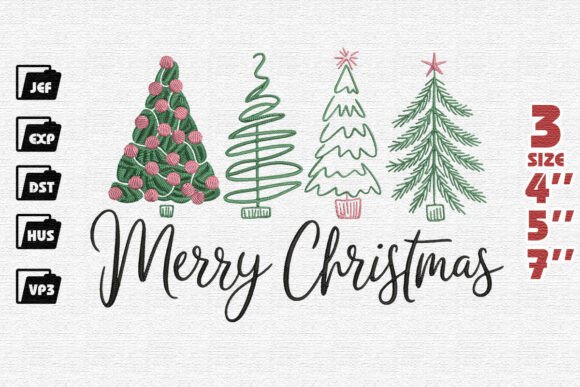
As an embroidery designer who’s prepped over 200 craft fair booths in the past decade, my gut reaction to Merry Christmas with Whimsical Trees Embroidery Design is immediate: this isn’t another generic holiday script. It lands somewhere between contemporary art print and hand-lettered charm—elegant enough for a boutique tea towel, playful enough to pop on a kid’s market bag. The “flowing black script” signals confidence and craftsmanship, while “whimsical trees” promises subtle visual interest—not literal silhouettes, but likely rhythmic, stylized accents that echo the letterforms. That balance makes it a rare find: festive without being cloying, artistic without sacrificing readability.
Where It Shines: Craft Fair Product Pairings
In real booth conditions—under warm string lights, crowded tables, and fast-moving shoppers—Merry Christmas with Whimsical Trees Embroidery Design performs strongest where contrast and clarity meet intention. Here’s how it holds up across key handmade products:
- Tote bag design: Excellent focal point when centered on natural canvas or oat linen. The flowing script reads cleanly from 6 feet away, and whimsical trees add just enough texture to catch light without competing.
- Apron embroidery: Ideal placement above the pocket or along the waistband. Feels elevated—not childish, not corporate—just warmly human. Works especially well on medium-weight denim or cotton twill.
- Tea towel embroidery: A standout on unbleached flour-sack cotton. The black script pops against raw texture, and the whimsy softens the utilitarian feel. Avoid overly dense terry weaves—fabric texture can mute fine lines.
- Embroidered patch: Highly effective as a sew-on or iron-on accent. Scales beautifully down to 3–4 inches. Customers love adding these to jackets, backpacks, or gift tags—great for impulse buys.
- Fabric pouch & pillow cover: Strong value-add. The design feels intentional, not slapped on—it elevates a simple pouch into a giftable handmade product. On pillow covers, center it on the front panel for maximum impact.
- Caps & curved surfaces: Use caution. Flowing script + curves = potential distortion. Test stitch on a scrap cap first. Opt for simplified versions or reposition to avoid the crown seam.
What Buyers Actually Notice (and Why It Sells)
At a craft fair, attention lasts seconds. Merry Christmas with Whimsical Trees Embroidery Design wins because it communicates three things instantly: holiday, handmade quality, and design intention. Unlike clip-art snowflakes or all-caps block fonts, this design invites closer looking—the curve of the “M”, the rhythm between words, the way the trees nestle into negative space. That curiosity translates directly to dwell time, questions, and sales. It also photographs exceptionally well for Etsy listings: clean lines, strong contrast, and inherent composition make printable mockups look professional with minimal editing.
Production Reality Check: What You Must Test Before Batch Runs
This isn’t a “load-and-go” machine embroidery design. Its artistry demands thoughtful execution:
- Test the design on scrap fabric—especially if using textured towels, dark denim, or thick canvas. Black thread on charcoal fabric? Might vanish. Contrast is non-negotiable.
- Review spacing and stitch density. Flowing script often uses delicate underlay or tapered satin stitches. Overly dense areas may pucker; too-light areas may lack definition. Adjust tension and stabilizer accordingly.
- Confirm hoop size and fabric clearance. Some flowing scripts extend wider than expected. Measure your largest intended product surface before digitizing or purchasing the embroidery file.
- Use the right stabilizer. Tear-away works for stable wovens; cut-away adds security for stretchy or lightweight fabrics. Skip fusible web alone—it won’t support fine script integrity.
- Create at least one real mockup before committing to 50 tote bags. See how it drapes, how light hits the thread, how it feels in hand. That physical sample is your best sales tool—and your most honest quality control.
- Compare fabric colors side-by-side. Ivory, oat, slate, and navy all change how “black script” reads. What looks rich on screen may read muddy in person.
- Confirm commercial licensing before selling finished products. As an Etsy seller or small shop product maker, you need explicit permission for resale—don’t assume “personal use only” covers your craft fair booth.
Careful-Use Notes: Where Clarity Can Fade
While versatile, Merry Christmas with Whimsical Trees Embroidery Design has limits worth honoring:
- Avoid scaling below 2.5 inches wide—the flowing script and tiny tree motifs risk blurring or stitching errors.
- Don’t force it onto heavily textured towels or thick quilted fabric without aggressive stabilizing—details will disappear.
- Dark fabric requires high-contrast thread (not just “black on black”)—consider charcoal gray or deep navy thread for visibility.
- Curved cap surfaces and tight seams distort fluid lettering. Reposition or simplify for those applications.
- Dense stitch areas may cause stiffness—test drape on apparel items like aprons or pouches before bulk production.
Final Verdict: A High-Return Holiday Design Asset
For embroidery business owners, Etsy sellers, and creative entrepreneurs building a cohesive holiday collection, Merry Christmas with Whimsical Trees Embroidery Design delivers exceptional ROI. It strengthens brand consistency—think matching tea towels, totes, and patches under one visual language. It boosts booth display strength by offering variety without visual chaos. And it deepens buyer engagement: people don’t just buy a tote—they remember the graceful “M”, the quiet joy in the trees, the feeling that something handmade was made *well*. In a sea of mass-produced cheer, this design whispers intention. And in the handmade market? That whisper sells.