Salty Hair Sandy Toes
A Designer’s First Impression: Sun-Drenched, Effortless, and Instantly Recognizable
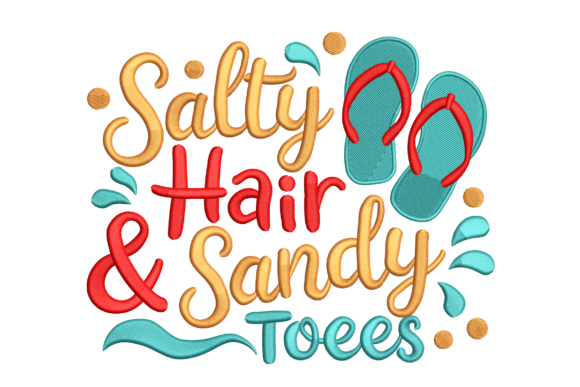
When I opened the Salty Hair Sandy Toes machine embroidery design, I felt that unmistakable summer exhale — warm air, bare feet on hot sand, salt-kissed hair blowing in the breeze. It’s not just a phrase stitched out; it’s a mood captured with light, breezy line work and balanced negative space. The decorative style leans into playful modern charm — clean curves, friendly lettering, and subtle ocean-inspired rhythm (think gentle wave-like spacing and soft flip-flop silhouette integration). It avoids clutter while still feeling intentional and finished. No nostalgia overload, no forced whimsy — just pure seasonal ease. That emotional tone is gold for holiday embroidery: it evokes memory, anticipation, and shared joy without leaning on clichés like palm trees or flamingos. For small shop product development, that authenticity builds instant trust.
Where This Design Shines Across Seasonal Product Lines
Salty Hair Sandy Toes isn’t limited to beach towels — it’s a versatile anchor for a full summer gift collection. On lightweight cotton sweatshirts? Perfect for family matching sets at reunions or vacation rentals. As a tote bag design? Ideal for farmers’ markets, poolside carry, or “new mom” welcome gifts — the phrase reads clearly at 4–5 inches wide and holds visual weight even when scaled down. For kitchen towel embroidery, its airy layout prevents stiffness and complements linen or terry textures beautifully. Pillow covers and aprons gain instant personality without overwhelming the fabric. As an embroidered patch? It layers effortlessly onto denim jackets or canvas backpacks — a ready-made personalized gift with strong shelf appeal at craft fairs.
I’ve used Salty Hair Sandy Toes in Etsy listings bundled with coordinating seashell motifs and minimalist sun icons — customers love the cohesive, printable mockup-ready aesthetic. It also performs exceptionally well in social media previews: the phrase stands out cleanly against sandy or sky-blue backgrounds, and its rhythm translates perfectly into Instagram Reels text overlays and Pinterest pin graphics. For limited edition apparel drops, pairing it with soft heather tees or organic cotton robes adds perceived value — it feels premium because it *breathes* like handmade, not mass-produced.
Smart Placement & Practical Boundaries
That said, every seasoned embroidery designer knows where to pause — and Salty Hair Sandy Toes has clear sweet spots and limits. Avoid using it below 3 inches in hoop size unless you’ve tested stitch density thoroughly; fine lettering can blur on dense fabrics. Tiny hoops (like 2.5” x 2.5”) risk losing the phrase’s lyrical flow — prioritize readability over miniaturization. On thick kitchen towels or heavy canvas, always use cutaway stabilizer (not tear-away) to prevent puckering and ensure crisp edges. Dark fabric demands careful thread color testing: off-white or ecru works better than stark white for warmth, and navy or charcoal thread adds depth on light backgrounds.
Steer clear of stretchy garments (like performance tees or ribbed knits) without proper stabilizer backing — the phrase’s horizontal span needs stability to avoid distortion. Curved surfaces (caps, mugs, curved pillow fronts) require repositioning or digitizing adjustments; the current file appears optimized for flat goods. And while metallic thread looks dreamy on mockups, it increases breakage risk during production — reserve it for small-batch, high-margin items only. Always confirm commercial licensing before selling finished products — this is non-negotiable for Etsy sellers and small business owners building repeatable inventory.
Why It Elevates Holiday & Seasonal Appeal
In the crowded holiday embroidery space, Salty Hair Sandy Toes cuts through noise by offering emotional resonance over literal imagery. It doesn’t scream “summer” — it *invites* it. That subtlety makes it highly giftable: a baby onesie with this design feels tender and timeless, not trendy. A set of embroidered napkins or table linens becomes part of a curated summer tablescape — boosting perceived value and encouraging bundle sales. For personalized gift buyers, the phrase lends itself naturally to monogramming or date-stitching beneath (e.g., “Salty Hair Sandy Toes • July 2024”), deepening connection.
Visually, it supports brand consistency across platforms: the clean typography scales cleanly from packaging stickers to digital ads. Its rhythm encourages engagement — shoppers pause, smile, read it aloud. That micro-moment builds loyalty. And during peak shopping periods, its clarity means faster decision-making: no decoding required, no ambiguity about season or sentiment. That’s how Salty Hair Sandy Toes turns casual browsers into confident buyers.
Designer Notes You’ll Want Before Stitching
- Test thread colors on both light and dark fabric — especially for gradient or blended effects.
- Check stitch density before bulk production; high density on lightweight cotton can cause stiffness.
- Confirm hoop size compatibility with your most-used frames — don’t assume it fits standard 4x4 without verification.
- Use appropriate stabilizer: cutaway for towels and bags, lightweight tear-away for tees and totes.
- Create realistic mockups — use actual fabric swatches, not just digital previews, to assess scale and balance.
- Review small details after stitching: check letter spacing, curve smoothness, and edge definition under natural light.
- Plan matching color palettes — coordinate thread with product packaging, tags, and social assets for unified branding.
- Verify commercial license terms before listing any finished product — protect your small shop product integrity.
Ultimately, Salty Hair Sandy Toes earns its place in a seasonal embroidery collection not because it’s easy to stitch — but because it’s easy to *love*, easy to sell, and easy to build a whole summer story around. It’s the kind of digital embroidery file that reminds us why we create: to stitch feeling, not just letters.