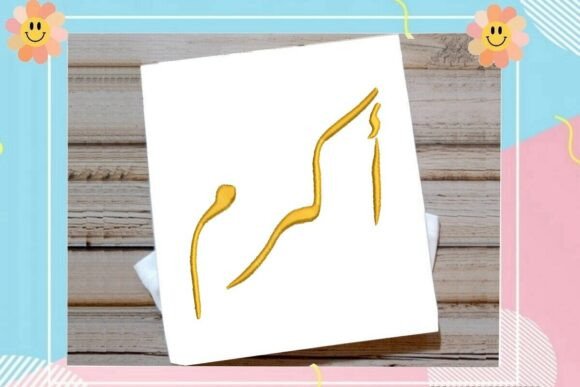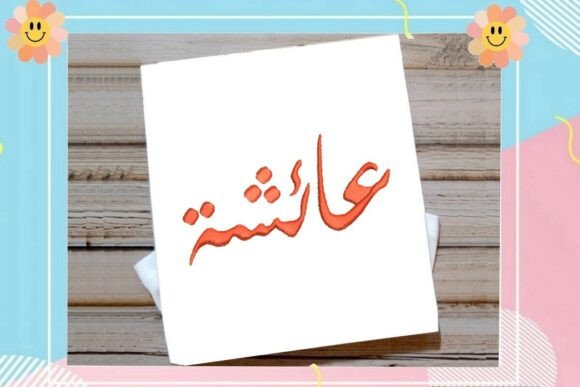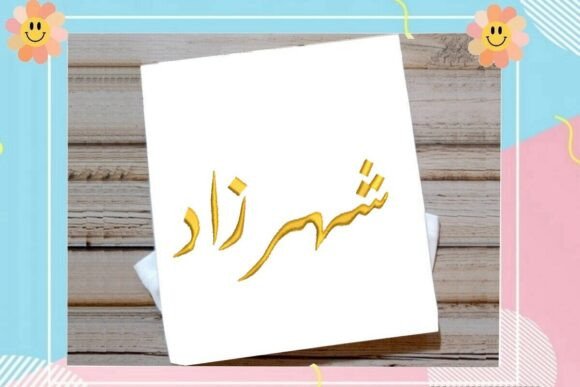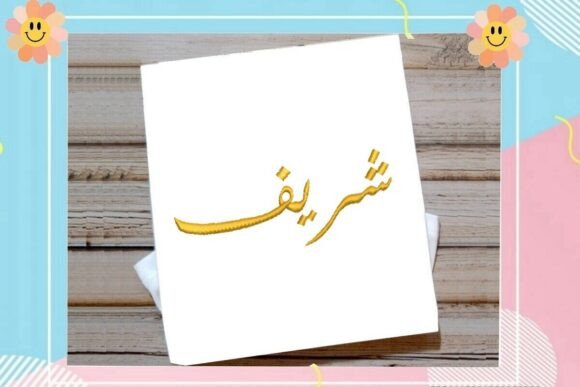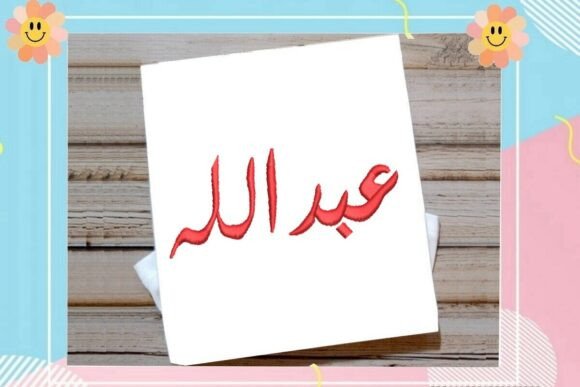
Abdullah Arabic Name
A Thoughtful Embroidery Design Review for Small Business Branding
As an embroidery designer who’s developed and tested hundreds of machine embroidery designs for small businesses—from neighborhood cafés and florists to handmade studios and Etsy sellers—I approached Abdullah Arabic Name with both aesthetic curiosity and practical scrutiny. This isn’t just another decorative calligraphy file. It’s positioned as an Islamic calligraphy machine embroidery file with five sizes, intended for real-world commercial use: embroidered patches, staff uniforms, aprons, caps, tote bags, and branded product accents. Let’s break down how it performs—not as wall art, but as functional brand identity.
First Impression: Elegant, Reverent, and Professionally Balanced
The title alone—Abdullah Arabic Name Embroidery Design—signals intentionality. “Abdullah” (عبد الله) carries deep cultural and spiritual resonance, and the description emphasizes elegance and tradition. Visually, based on the naming convention and category (Friends, Embroidery), this design leans into refined simplicity rather than ornate embellishment. That’s a strategic advantage for small business merch: it reads as premium yet approachable, handmade yet polished, and distinctive without being distracting. For a boutique bakery, a pet wellness brand, or a creative studio named Abdullah—or one honoring heritage—it delivers immediate authenticity and warmth.
Real-World Performance Across Merchandise Types
Embroidered patches are where Abdullah Arabic Name shines brightest. Its clean line work and balanced proportions translate well across 2”, 3”, and 4” patch sizes—ideal for sew-on branding on tote bags, aprons, or jacket sleeves. On staff uniforms, it reads clearly at chest level without overwhelming fabric real estate. As cap embroidery, the medium and large sizes hold up beautifully on structured front panels, especially when paired with subtle thread colors like charcoal grey, navy, or deep olive.
For apron embroidery, the design adds quiet authority—think a florist’s linen apron or a café’s canvas wrap. On tote bag design, it anchors the lower corner or center panel with understated confidence. And because it’s built for machine embroidery, it scales reliably: the smallest size maintains legibility down to ~1.75”, making it viable for sleeve accents or product packaging tags—provided you verify spacing and stitch density in your embroidery software first.
Where to Use Abdullah Arabic Name With Intention
This design excels in consistency—but not every surface is equal. Avoid placing it on highly curved cap fronts at the smallest size; Arabic script relies on horizontal flow, and extreme curvature can distort letter connections. Similarly, test carefully on textured fabric like heavy twill or bouclé—weave gaps may cause floating stitches unless paired with cutaway stabilizer.
Dark uniforms? Yes—but confirm thread color contrast. A gold or cream thread on black twill elevates perceived value, while low-contrast options (e.g., light grey on navy) risk fading into the background. Also, watch for stitch density: Islamic calligraphy often includes fine internal curves. If the file packs too many satin stitches into tight spaces, dense areas may pucker on lightweight cotton or stretchy knits. Always run a test on your target fabric before bulk production.
How Abdullah Arabic Name Strengthens Brand Identity
In small business branding, every visual touchpoint builds trust—and Abdullah Arabic Name contributes meaningfully. Unlike generic monograms or clip-art motifs, it signals intention, heritage, and care. Customers notice that. A handmade soap brand using it on linen pouches gains instant credibility. A local café embroidering it onto barista aprons communicates respect—not just for craft, but for community and identity. That translates directly to customer engagement, repeat visits, and word-of-mouth resonance.
It also supports visual consistency across touchpoints: same design on a cap, tote, and product tag creates cohesion without repetition fatigue. And because it’s rooted in authentic calligraphy—not algorithmic fonts—it enhances the handmade product narrative essential to Etsy sellers and artisanal brands.
Practical Designer Notes Before You Stitch
- Always test in black and white first—this reveals spacing issues, overlapping paths, and unintended stitch stacking that color can mask.
- Check minimum viable size for your intended use: does the smallest file hold clarity at 1.5” wide on twill? Run a sample before digitizing full batches.
- Review thread color contrast against your base fabric—not just on screen. A printable mockup helps clients visualize final impact.
- Inspect letter spacing and baseline alignment, especially where “ع” and “ل” connect. Uneven kerning breaks rhythm and weakens professionalism.
- Confirm hoop size compatibility with your embroidery machine and frame setup—especially if layering with other design assets.
- Use appropriate stabilizer: cutaway for knits, tear-away for stable wovens, and fusible + cutaway for lightweight linens.
- Create a physical mockup before client approval—digital previews rarely capture texture, drape, or sheen.
- Compare beside existing design assets: does Abdullah Arabic Name harmonize with your logo, typography, and brand palette?
- Verify commercial licensing before using on merchandise for sale—especially for small business merch, custom apparel, or commercial embroidery services.
Final Thoughts for Embroidery Shops and Creative Brands
Abdullah Arabic Name isn’t just a digital embroidery file—it’s a versatile, culturally grounded asset for thoughtful branding. When used intentionally—as a chest accent on a florist’s apron, a subtle sleeve detail on a boutique’s staff shirt, or a refined patch on a handmade candle brand’s tote—it elevates perception, deepens connection, and reinforces authenticity. It fits naturally within the Friends category not because it’s casual, but because it invites familiarity, respect, and shared values.
For embroidery shops sourcing reliable files, for Etsy sellers building cohesive collections, and for small businesses investing in lasting brand marks: Abdullah Arabic Name earns its place—not as decoration, but as deliberate, dignified identity. Just remember: test, stabilize, contrast-check, and always align with your story. Because in embroidery, the most powerful statements are stitched—not shouted.