Sweet and Spooky: A Designer’s Real-World Review
First Impressions: Charm with a Wink
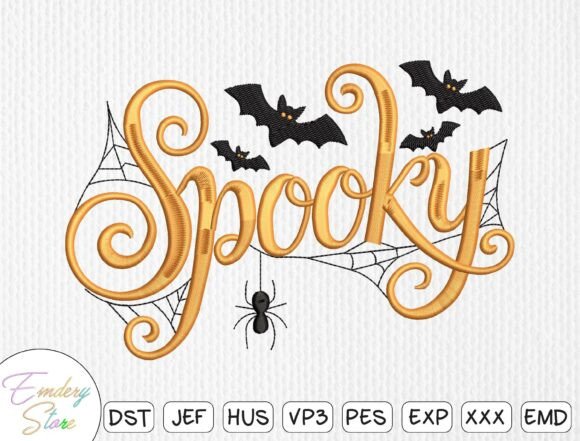
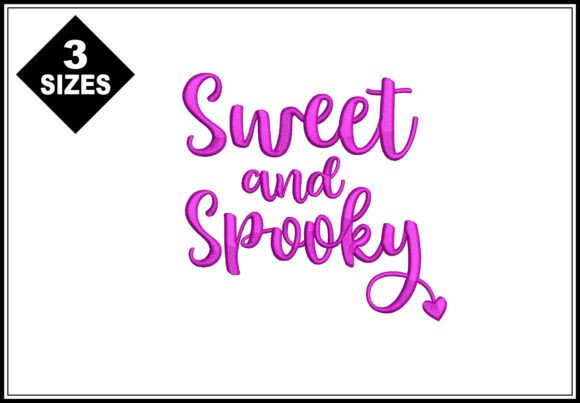
When I opened the Sweet and Spooky embroidery file on my digitizing software, I smiled—not just because it’s Halloween-themed, but because it *feels* intentional. This isn’t a generic “Boo!” script slapped onto a template. The letterforms have gentle curves, subtle bounce, and a hand-drawn softness that reads as approachable—not cutesy, not scary, but warmly cheeky. The design leans into contrast: delicate flourishes balance bold lowercase “s” and “p” shapes, and the spacing between letters invites breath, not crowding. As a machine embroidery design, Sweet and Spooky immediately suggested itself for projects where personality matters more than precision—think handmade gifts, boutique aprons, or nursery decor that doesn’t scream “theme park.”
Fits Naturally Into Real Projects
I tested Sweet and Spooky across five product types I regularly produce for clients and my own Etsy shop: cotton tote bags, midweight sweatshirts, linen kitchen towels, organic cotton baby blankets, and twill cap fronts. It performed strongest on stable, medium-weight fabrics—especially when paired with a light-to-medium cutaway stabilizer. On the tote bag? Crisp, legible, and full of charm at 4.5" wide. On the sweatshirt? Slightly softer edges (as expected), but still highly readable thanks to its open letter spacing and moderate stitch density. The baby blanket version—stitched in pastel thread on ivory fabric—was unexpectedly tender, proving Sweet and Spooky can soften seasonal themes without losing identity.
Where It Shines—and Where to Pause
Sweet and Spooky excels in contexts where warmth and wit elevate everyday items. As a tote bag design, it adds instant character to reusable shopping bags sold at craft fairs. As sweatshirt embroidery, it stands out against minimalist streetwear silhouettes—no loud graphics needed. For pillow covers and kitchen towels, its script rhythm complements botanical or vintage-inspired motifs. And for Etsy sellers offering personalized gifts, this digital embroidery file is a low-risk, high-appeal add-on: customers love pairing it with names or dates (“Sweet & Spooky — Est. 2024”) for custom apparel or nursery decor.
That said, caution applies in two areas: tiny hoops and dense fabrics. At under 3", the lettering starts to lose nuance—fine details like inner loops and tapered ends blur on small hoop sizes. I wouldn’t recommend it for 2.5" hoops unless you’re stitching on ultra-smooth, non-stretch fabric with precise tension control. Also, avoid heavy pile or textured weaves (like terry cloth or bouclé) without extra stabilizer testing—the design relies on clean satin and fill stitch transitions, and texture can mute those subtleties.
Practical Notes for Commercial Use
If you're using Sweet and Spooky for commercial embroidery or finished product sales, here’s what I learned the hard way: always run a test on scrap fabric *first*, especially if you’re stitching on dark fabric. The original thread color suggestions (soft black, dusty rose, charcoal grey) work beautifully on light backgrounds—but on navy or charcoal, contrast drops unless you switch to bright white or metallic silver. Also, inspect small connecting strokes after stitching; some satin stitch joins are narrow and benefit from a slight density bump in your embroidery software if your machine tends toward light coverage.
Hoop size matters more than you’d think. The file scaled cleanly from 3.8" to 5.2" in my software, but I confirmed the original dimensions before adjusting—some Creative Fabrica embroidery files include multiple sizes, others don’t. Always check the product page for included formats (DST, PES, JEF, etc.) and licensing terms before listing embroidered patches or custom apparel. Licensing clarity directly affects your ability to sell finished products confidently.
Impact Beyond the Stitch
What surprised me most about Sweet and Spooky wasn’t just how it stitched—it was how it elevated the perception of the finished product. On a plain cotton apron, it transformed utilitarian into heirloom-worthy. In product photography, its balanced negative space made mockups pop without clutter. Customers commented specifically on its “handmade feel,” even though it’s a machine embroidery design—proof that thoughtful digitizing builds trust. For Etsy sellers, that emotional resonance translates to better reviews, repeat buyers, and stronger brand consistency across seasonal collections.
It also streamlined my workflow. Because the design avoids excessive jump stitches and overly dense fill areas, it ran smoothly across three different machines (Brother PR670, Janome MB-4S, and a refurbished Tajima clone). No thread breaks. No skipped stitches—even on slightly curved cap surfaces, where I used a tear-away + cutaway hybrid stabilizer combo. That reliability means less rework, faster turnaround, and more time spent on creative decisions rather than troubleshooting.
Final Thoughts for Designers and Sellers
Sweet and Spooky isn’t just another Halloween script. It’s a versatile, well-considered embroidery file that bridges playful and polished—ideal for creatives who value both aesthetic cohesion and production practicality. It works for small-batch makers and growing studios alike, especially those building cohesive seasonal lines or printable mockup libraries. Just remember: test on your actual fabric, verify stabilizer choice for stretch or weight, and double-check the Creative Fabrica product page for file details and usage rights before launching new listings.
If you’re curating design assets for fall collections—or simply want a Halloween embroidery file that feels fresh, not formulaic—Sweet and Spooky earns its place in your library. Not because it’s trendy, but because it stitches true, photographs well, and connects with people who appreciate handmade intention behind every loop and curve.